
More than 15 million children in the United States live in homes in which domestic violence has happened at least once.
Domestic Violence: Restoring Safety, Dignity & Self-Determination
Domestic violence is one of the most common — and least acknowledged — forms of harm that young people experience. It shapes how they see safety, relationships, trust, and themselves. Domestic violence does not only harm adults; it deeply impacts children, teens, and young adults who are living in the home, navigating abusive relationships themselves, or carrying the effects of childhood trauma into adulthood.
At The Lost & Found Institute, we recognize that domestic violence is not just an individual problem — it is a reflection of power, control, generational trauma, and systems that have failed to protect survivors. Our work centers healing, dignity, and survivor leadership so young people can move from survival toward liberation.
Understanding Domestic Violence
Domestic violence is a pattern of power and control within an intimate or family relationship. It can look like:
Physical harm or threats
Emotional abuse, manipulation, or humiliation
Isolation from friends, school, work, or family
Financial control or withholding resources
Sexual coercion or violence
Using children as leverage
Stalking and digital monitoring
Destroying property or threatening pets
For youth and young adults, domestic violence often intersects with:
Childhood exposure to violence
Foster care involvement
Housing instability
Teen dating violence
Juvenile justice and criminalization
LGBTQ+ identity and family rejection
Systemic racism and intergenerational trauma
Many survivors never call it “abuse.” They call it normal, because it’s all they’ve ever known.
Our work helps young people rewrite that story — in community, not isolation.
What Domestic Violence Feels Like from the Inside
For young people, domestic violence can feel like:
Trying to keep the peace to avoid triggering harm
Being afraid to go home — or afraid to leave
Misplacing the blame on themselves
Feeling responsible for protecting siblings or parents
Loving someone who hurts them
Feeling guilty for wanting safety
Carrying silence because disclosure might lead to CPS, police, or family separation
Being punished or criminalized for trauma responses
“I learned to be quiet to survive.”
— Youth survivor
“Violence was normal until I learned what love was supposed to feel like.”
— Young adult survivor
Domestic violence is not just an event.
It is an environment — and leaving that environment requires support, not shame.
What You Can Do
Everyone can play a role in supporting survivors:
Believe youth and young adults when they disclose harm
Challenge abusive behaviors and norms in your community
Share resources so survivors know where to turn
Create safe spaces rooted in trust and compassion
Support youth-led organizations doing this work
Safety is not a privilege.
It is a human right.
Content Note
This page discusses physical, sexual, and emotional violence. Please take care while reading. You can pause, skip sections, or ask for grounding support — your well-being matters.
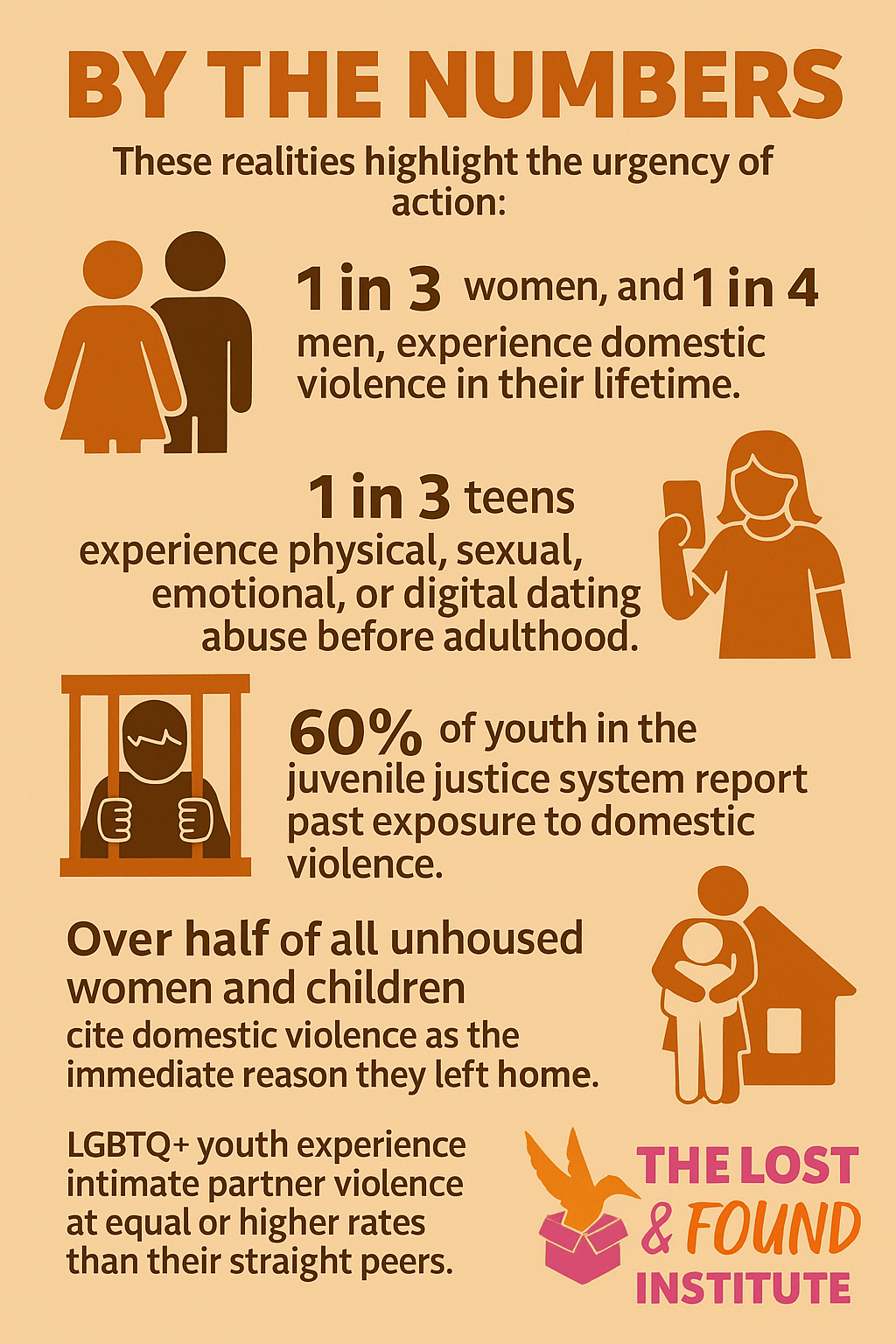
How Domestic Violence Intersects with Other Systems
Domestic violence doesn’t happen in isolation. It intersects with:
Foster Care
Youth removed from homes because of domestic violence may face additional trauma, instability, and separation from siblings and culture.
Juvenile & Criminal Justice
Survivors — especially girls — are often criminalized for defending themselves, running away, or surviving. Many “offenses” are trauma responses.
Homelessness
Domestic violence is one of the leading drivers of youth and family homelessness.
Mental & Behavioral Health
Survivors often live with anxiety, depression, PTSD, hypervigilance, or dissociation — yet rarely receive consistent, culturally responsive care.
Trafficking & Exploitation
Youth fleeing violence are at heightened risk for exploitation because traffickers target unmet needs for safety, housing, and connection.
To address domestic violence, we must also address the systems that make leaving dangerous, expensive, or impossible.
Resources:
Court Appointed Special Advocated for Children (CASA)
https://advocacyinaction.casaforchildren.org/safety/domestic-violence-and-child-welfare-involvement/
U.S. Department of Justice, Office of Justice Programs
https://ojp.gov/program/programs/cev
U.S. Department of Health & Human Services, Office on Women’s Health
Domestic Violence Services Inc.
https://www.dvs-or.org/children-domestic-violence-statistics/
