
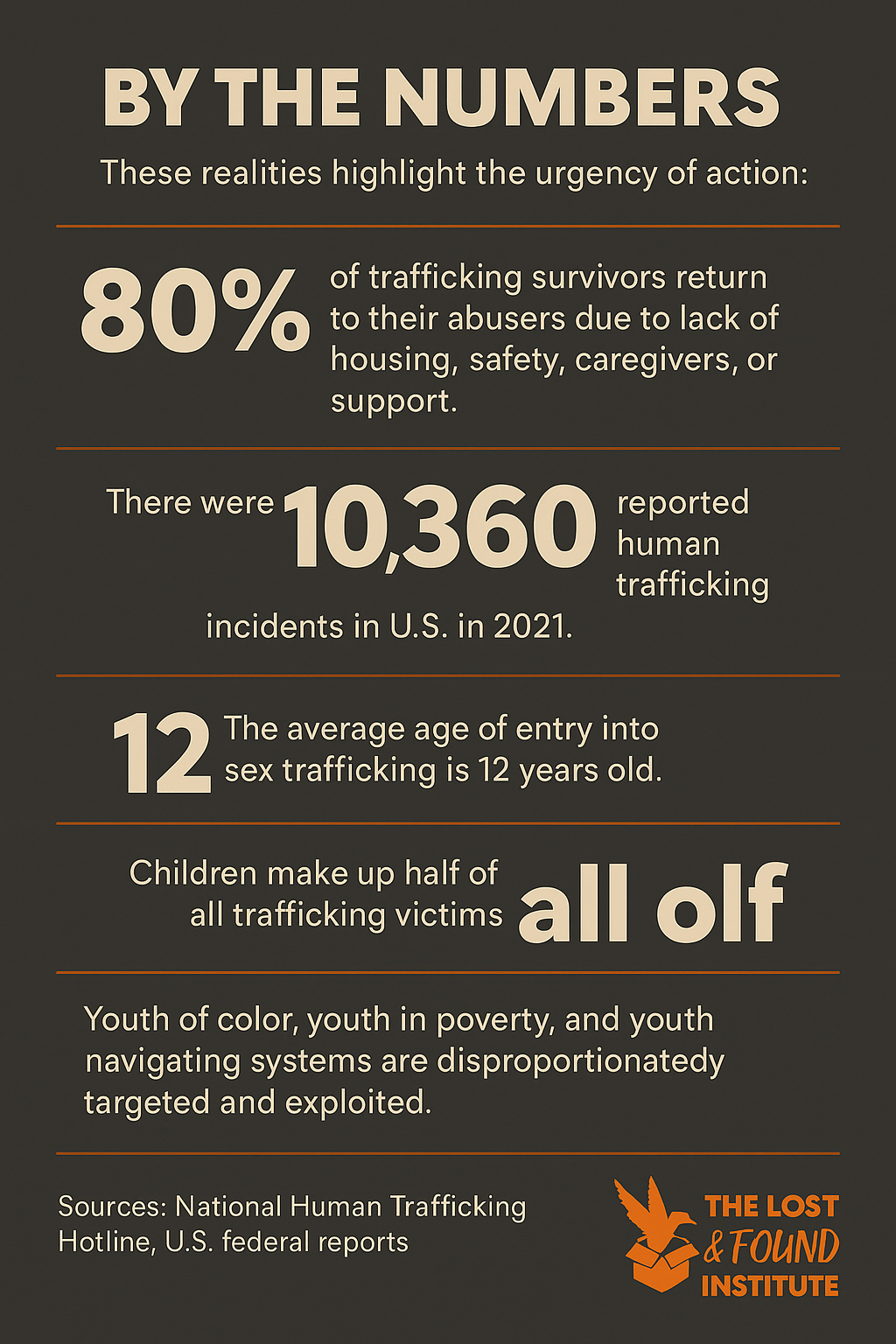
80% Percent of trafficked women return to their abusers, according to a 2020 statement from the United States Department of State. The Department of State says this is due to the intensity, familiarity, and routine of the relationship.
Human Trafficking: Centering Healing, Safety, and Survivor Leadership
Human trafficking thrives in the shadows of systems that fail to protect young people. It is not an individual issue — it is a community issue, a policy issue, and a systemic issue. At The Lost & Found Institute, we honor the wisdom of survivors and build pathways to safety, stability, and self-defined liberation. We work to ensure that young people impacted by trafficking are believed, supported, and surrounded by community, not criminalized or blamed.
If you need help now, support is available.
📞 National Human Trafficking Hotline: 1-888-373-7888
📱 Text “BEFREE” to 233733
Understanding Human Trafficking
Human trafficking happens when someone uses force, fraud, coercion, or manipulation to exploit another person — often for sex or labor — and thrives in environments shaped by poverty, instability, racism, sexism, homophobia, ageism, and system involvement.
Traffickers often target young people who have been overlooked, unsupported, or pushed into survival mode. Trafficking is not about bad choices — it is about vulnerable environments, unmet needs, and systems that fail to show up with care.
At The Lost & Found Institute, we center healing, dignity, and lived-experience leadership in everything we do. We believe survivors deserve to be safe, valued, and free to write their own future.
Who Is Most at Risk?
Traffickers prey on isolation, instability, and unmet needs. Young people are especially vulnerable when they experience:
Foster care involvement or aging out of care
Juvenile justice system involvement
Running away, homelessness, or couch surfing
Family and interpersonal violence
Economic instability, poverty, or survival needs
Disconnection from family or community
Mental health struggles or unaddressed trauma
Lack of consistent, trusted adults
No young person is ever at fault. Vulnerability is never consent. Exploitation is never a choice.
Recognizing Red Flags & Signs
Human trafficking doesn’t always “look” like what the media portrays. Some signs may include:
Sudden changes in appearance, behavior, or relationships
Isolation from friends, school, or family
An older, controlling partner or “friend”
Someone else speaking for them
Unexplained money, clothes, rides, or gifts
Fearfulness toward police or authority figures
Repeated running away or system involvement
Online grooming on social platforms or gaming apps
Important: These indicators alone do not confirm trafficking — but they may signal that a young person needs support, safety, and someone to check in with care.
Resources:
Dignity Freedom Network
Office of the Attorney General for the District of Columbia
https://oag.dc.gov/public-safety/human-trafficking-initiatives/human-trafficking-fact-sheet
Polaris Project
