Training & Technical Assitance
We understand the critical importance of providing effective support to those working within various systems and with those who have endured traumatic experiences. Our mission is to equip organizations and providers around the nation with the knowledge, skills, and resources necessary to be healthy and safe partners who can support children, youth, and adults who are system and trauma impacted on their path to healing and self-discovery.
-
Comprehensive Training Programs
Our training programs are designed by lived experience experts. We offer a comprehensive experience tailored to the unique challenges faced by professionals working with children, youth, and adults in systems and those who've experienced trauma.
-
Trauma-Informed Approach
We prioritize a trauma-informed approach in all our training modules. Our goal is to create environments that are safe, supportive, and understanding of the complex needs of children youth and young adults who have experienced trauma. Through our training, participants gain valuable insights into trauma's effects and learn practical strategies for creating healing environments.
-
Experienced Instructors
Our instructors bring a wealth of experience and expertise to the table. They are passionate about empowering others and dedicated to helping participants develop the skills necessary to effectively support children, youth and adults in their care.
-
Flexible Learning Options
We understand that professionals and caregivers have busy schedules. That's why we offer flexible learning options, including online courses, workshops, and on-site training sessions. Whether you prefer virtual learning or in person group settings, we have options to suit your needs.
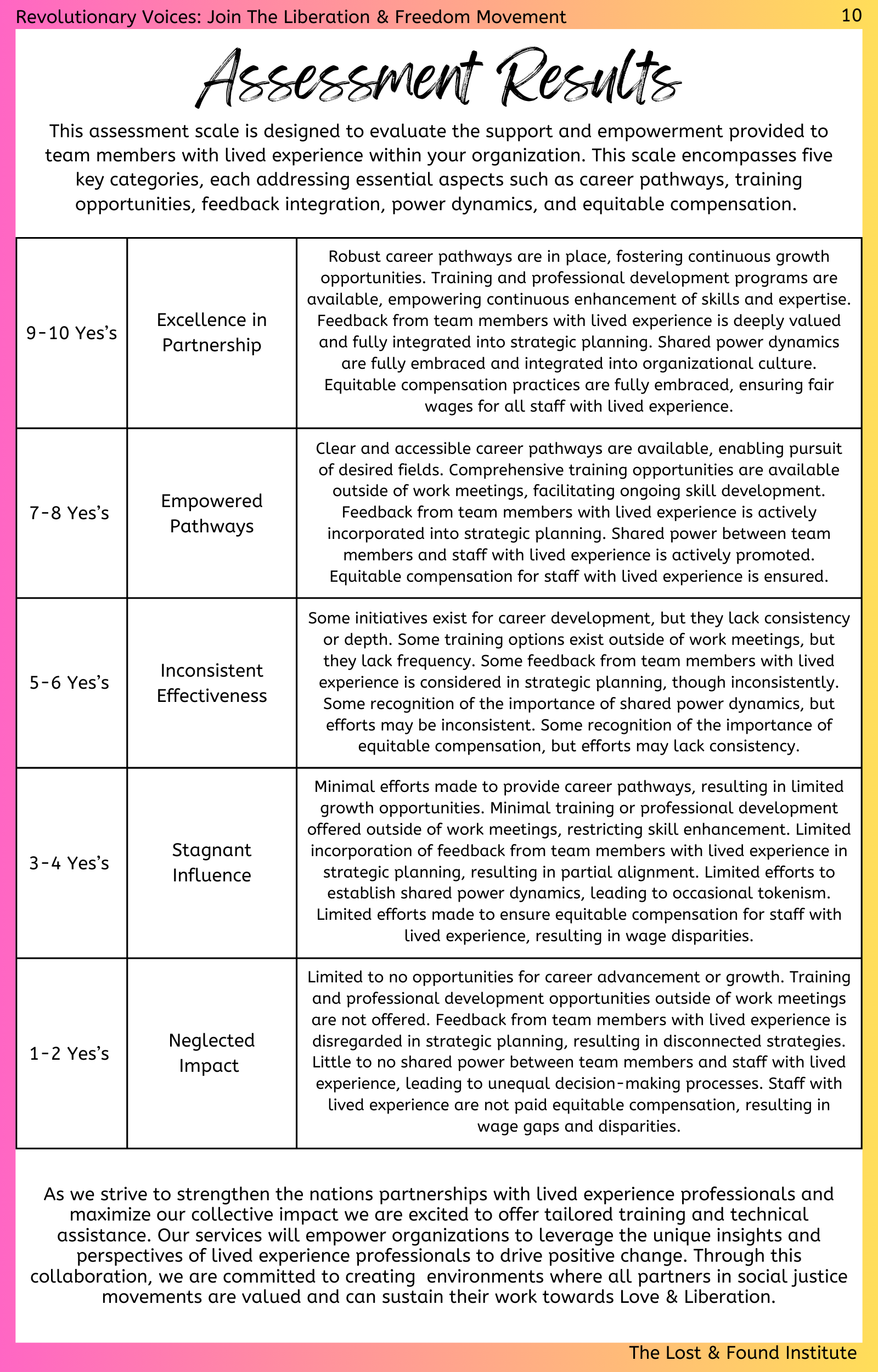
Organizational Readiness & Lived Experience Partnership Assessment
This assessment helps organizations evaluate how effectively they support, partner with, and empower team members with lived experience. Developed by The Lost & Found Institute, this tool guides agencies and nonprofits in examining their internal culture, power dynamics, compensation practices, development pathways, and readiness to authentically integrate lived experience leadership. Organizations can use this assessment to identify strengths, uncover gaps, and build sustainable solutions that honor the expertise of lived experience professionals and ensure safe, equitable, and liberatory work environments.