
There are more than 391,000 children and youth in foster care in the United States.
Foster Care: Reimagining Safety, Belonging, and Liberation
There are more than 391,000 children and youth in foster care in the United States. Foster care is meant to offer safety — but too often, it separates young people from everything familiar while failing to heal the conditions that brought them into the system.
For many, foster care is not protection. It is another system to survive.
At The Lost & Found Institute, we center the wisdom, leadership, and brilliance of people who have lived through foster care. We believe every young person deserves stability, dignity, and a future shaped by love and liberation, not paperwork and placements.
Understanding Foster Care
Foster care was created as a response to family harm and instability. But the current system often produces new trauma:
Repeated moves and unstable placements
Disconnection from siblings, culture, and community
Over-surveillance and punishment
A lack of meaningful mental health support
Systemic racism, bias, and disproportionality
Youth aging out without family, housing, or support
These experiences shape the lives of system-impacted youth long after they exit care — influencing education, relationships, housing stability, mental health, and overall well-being.
Surviving foster care requires resilience.
Transforming it requires listening to those who lived it.
What Foster Care Feels Like from the Inside
Behind every statistic is a young person navigating:
Being moved multiple times with no warning
Losing siblings, friends, and cultural identity
Living with strangers who may not understand trauma
Navigating courts, caseworkers, and judges
Carrying a file that speaks louder than their voice
Many youth describe foster care not as a safety net, but as a maze — one where decisions about their lives are made without them, and where stability feels out of reach.
“I wasn’t saved. I was moved around until I aged out.”
— Former foster youth
“I needed consistency, not a new placement.”
— Survivor, age 16
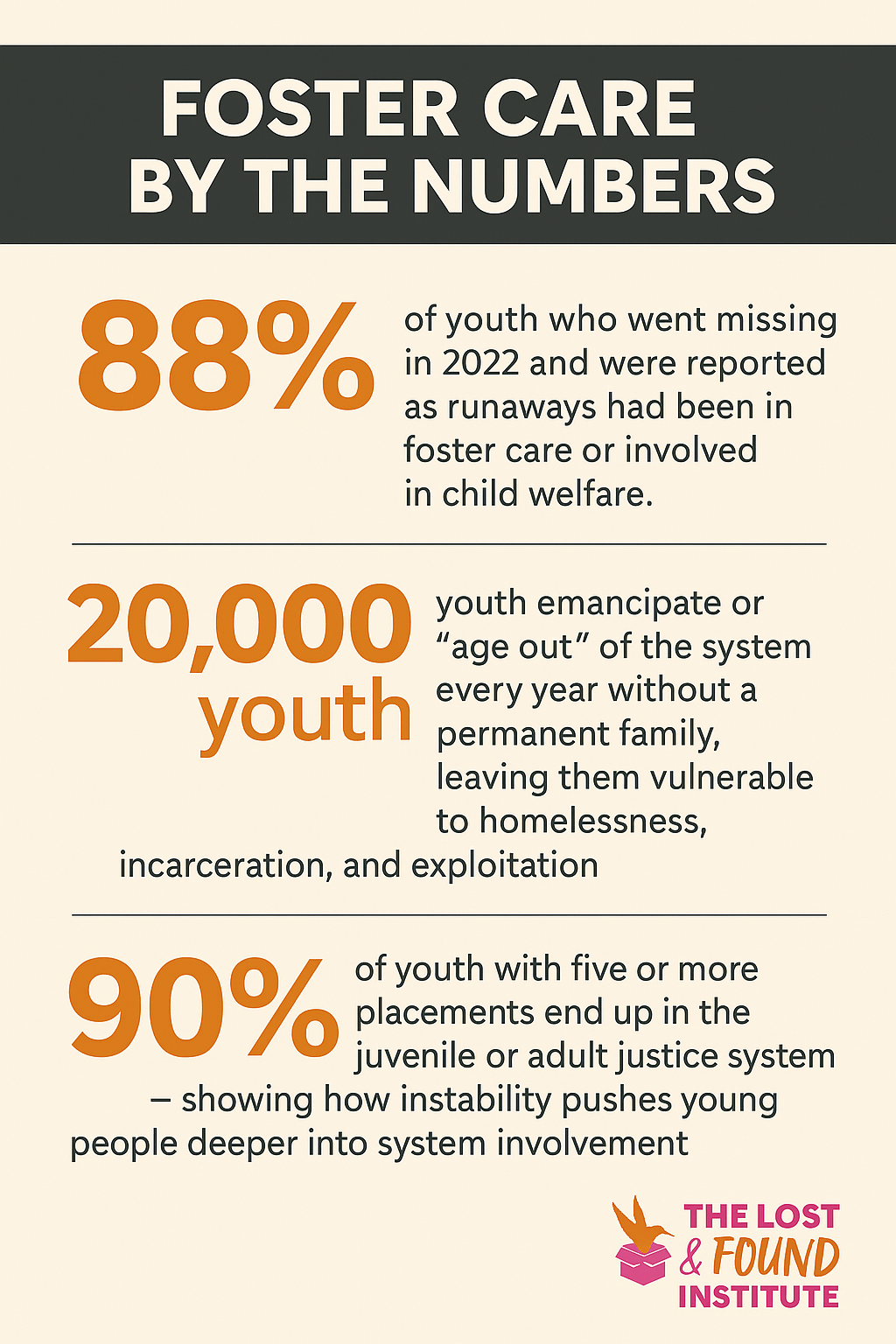
When Systems Collide
Foster care does not exist alone. It intersects with multiple systems, creating overlapping pathways to harm:
Foster Care ➜ Homelessness
Many youth age out into unstable housing or literal homelessness.Foster Care ➜ Juvenile Justice
Instability, trauma, and punitive responses push youth into court involvement.Foster Care ➜ Human Trafficking
Youth in care are disproportionately targeted by traffickers due to isolation, unmet needs, and lack of safe connections.Foster Care ➜ Behavioral Health
Many youth cycle through residential treatment, group homes, or mental health institutions instead of receiving community-based support.
Understanding these intersections helps communities respond with compassion, not blame.
Resources
The Policy Circle
https://www.thepolicycircle.org/brief/the-failures-and-future-of-the-u-s-foster-care-system/
Child Welfare Information Gateway, National Foster Care Month Outreach Toolkit
https://www.childwelfare.gov/resources/national-foster-care-month-outreach-toolkit/
