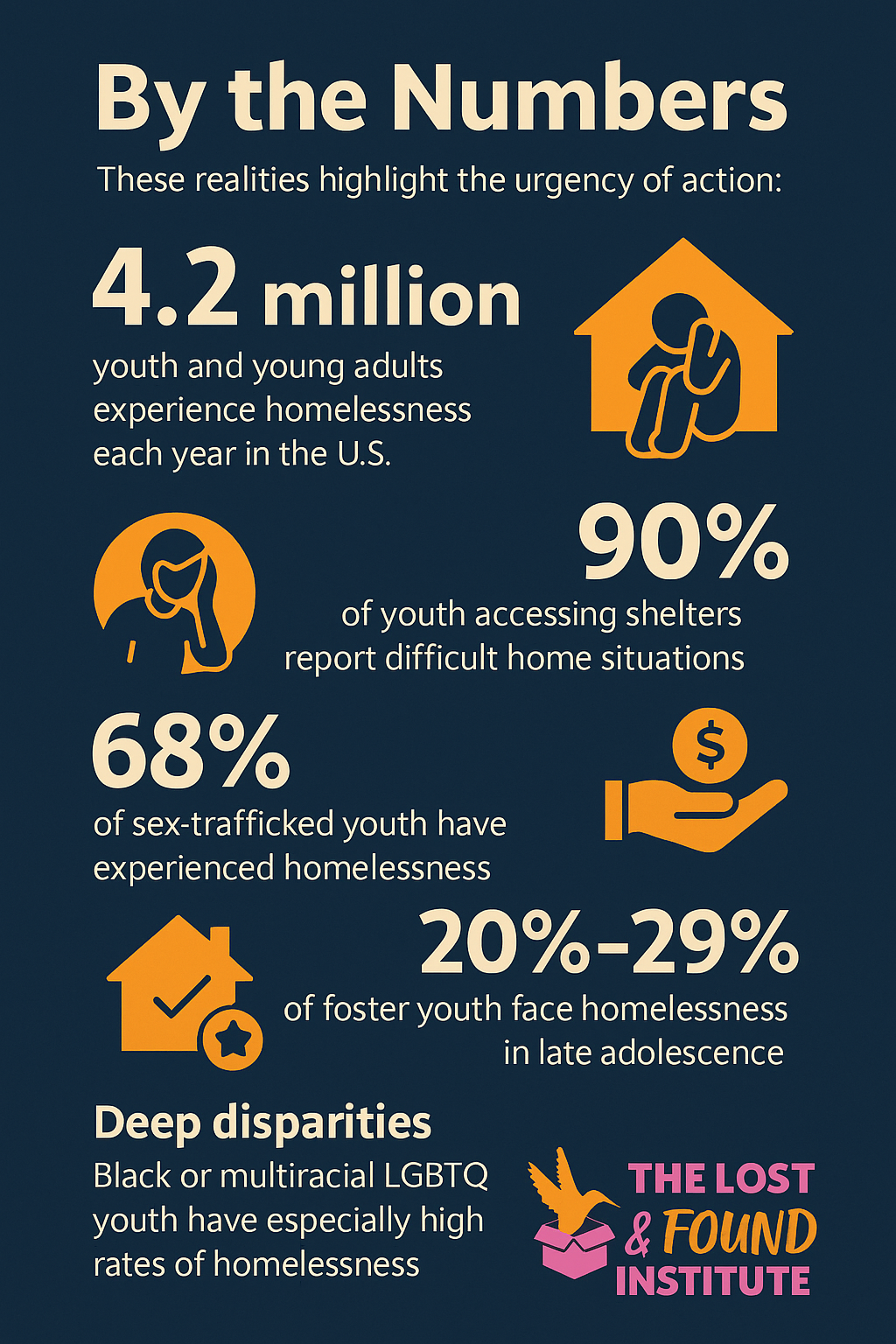
4.2 million youth experience homelessness each year
Youth Homelessness: Building Safety, Belonging, and Home
Every year, an estimated 4.2 million youth and young adults experience homelessness in the United States. For many, it starts long before they ever sleep outside: family instability, foster care placements, system involvement, and the slow erosion of safety and support.
At The Lost & Found Institute, we know that youth homelessness is not a personal failure. It’s a reflection of systems that have failed to provide stable housing, loving connections, and real options. We work alongside young people to build community, safety, and self-defined home — wherever they are in their journey.
Understanding Youth Homelessness
Youth homelessness looks many different ways:
Sleeping in cars, tents, parks, or abandoned buildings
Couch surfing between friends’ houses
Staying in shelters, motels, or unsafe short-term situations
Trading sex, labor, or relationships for a place to stay
Most young people who experience homelessness have already been navigating family conflict, poverty, violence, foster care, or juvenile justice involvement.
Youth who are homeless are also more likely to belong to groups targeted by structural racism, homo/transphobia, and ableism — including Black and multiracial youth, LGBTQ+ youth, and youth with disabilities.
Homelessness is not just about losing housing. It’s about losing support, safety, and a sense of belonging — and then having to survive without it.
What Youth Homelessness Feels Like from the Inside
For young people, homelessness often feels like:
Carrying everything they own in a bag
Choosing between unsafe options because there are no safe ones
Being watched, moved along, or criminalized for simply existing outside
Losing contact with school, services, and people who once knew them
Being told to “just go home” when home is where the harm happened
“I wasn’t choosing the streets. I was choosing to stay alive.”
— Youth with lived experience of homelessness
Homelessness isn’t just about lacking a roof. It’s about lacking trusted adults, stable relationships, and a community that refuses to let you disappear.
How Youth Homelessness Intersects with Other Systems
Youth homelessness rarely happens in isolation. It sits at the crossroads of multiple systems:
Foster Care ➜ Homelessness
Aging out without a permanent family or support leads many young people directly into unstable housing or street homelessness.Juvenile Justice ➜ Homelessness
Youth leaving detention or incarceration often face housing bans, strained family relationships, and limited reentry support.Behavioral Health ➜ Homelessness
Unmet mental and behavioral health needs can make it harder to maintain school, work, or housing — and the experience of homelessness further harms mental health.Homelessness ➜ Trafficking & Exploitation
When basic needs go unmet, young people may resort to survival sex or be targeted by traffickers who exploit their vulnerability.To end youth homelessness, we must transform the systems that produce it — not just manage it once it happens.
Resources:
The Annie E. Casey Foundation, PREVENTING AND ENDING YOUTH HOMELESSNESS IN AMERICA
https://assets.aecf.org/m/resourcedoc/aecf-youthhomelessness-2023.pdf
National Network for Youth
https://nn4youth.org/learn/youth-homelessness/
Covenant House
https://www.covenanthouse.org/homeless-issues/youth-homelessness-statistics